Weed in Hue: Law, Risk, and Street Reality in Central Vietnam
Weed in Hue is fully illegal under the zero-tolerance drug laws of Vietnam. The state classifies cannabis alongside heroin and cocaine. Therefore, even small amounts can lead to fines, detention, and confiscation. Meanwhile, dealing, cultivation, or trafficking can bring long prison terms, life sentences, or even the death penalty in severe cases.
Although Hue draws visitors for imperial history and calm streets, the legal framework does not soften for culture or tourism. Instead, national drug law applies in full. As a result, anyone considering weed in Hue should understand both the written law and the real enforcement climate.
Vietnam’s Drug Law and How It Applies to Weed in Hue
Vietnam enforces a strict anti-drug code nationwide. First, recreational cannabis is illegal. Second, medical cannabis has no regulated pathway. In other words, there is no legal exception for THC-bearing products.
Hue, located in central Vietnam, follows the same national framework. Consequently:
- Possession is illegal.
- Use is illegal.
- Sale and transport are illegal.
- Cultivation is illegal.
Because cannabis falls under the narcotics code, penalties scale by quantity and intent. Small amounts may trigger administrative sanctions. However, larger quantities can convert a case into a criminal prosecution.
In practice, this means weed in Hue carries the same statutory exposure as in larger cities such as Hanoi or Ho Chi Minh City. There is no local reform or decriminalisation model in place.
Penalties for Weed in Hue: Users vs Traffickers
Vietnamese law distinguishes between personal use and supply crimes. Nevertheless, both categories carry real risk.
Possession and Personal Use
If police catch someone with a small amount of cannabis in Hue, outcomes may include:
- Fines
- Temporary detention
- Confiscation
- Mandatory education or rehab programs
Travel summaries often note fines in the range of roughly US$100 for tourists. However, this outcome remains discretionary. Therefore, it should not be treated as guaranteed.
Moreover, repeat behaviour or visible public use can escalate consequences. Police maintain broad authority in drug enforcement matters.
Trafficking and Sale
On the other hand, selling or transporting cannabis triggers severe criminal penalties. Vietnamese law allows sentences of 20 years or more for significant quantities. In extreme trafficking cases, statutes permit life imprisonment or capital punishment.
Hue police have demonstrated active enforcement against suppliers. In June 2024, local authorities dismantled a cannabis dealing point on Duy Tân Street and arrested the ringleader for buying and selling imported high-THC marijuana. A criminal case followed.
Therefore, while casual users may sometimes face fines, dealers face structured prosecution and long sentences.
Foreigners and Weed in Hue
Foreign nationals are subject to the same narcotics provisions as locals. In fact, importing cannabis into Vietnam often triggers harsher scrutiny.
Potential consequences for foreigners include:
- Arrest at the border
- Criminal charges
- Deportation after sentence
- Long-term visa bans
Vietnamese legal advisors consistently warn travelers not to bring cannabis or CBD products into the country. Border officials may not differentiate between legal hemp CBD abroad and illegal THC products under Vietnamese law.
As a result, even products that seem minor in other jurisdictions can generate serious problems in Hue.
Access and Availability of Weed in Hue
Although weed in Hue is illegal, a limited underground market exists. However, access remains constrained and risky.
Street Offers
In busier tourist areas near the Imperial City or backpacker streets, individuals may quietly offer cannabis. Yet these encounters carry high risk. Police patrol tourist zones, and scams occur frequently.
Private Circles
Locals who consume cannabis usually rely on trusted networks. Meanwhile, outsiders rarely gain entry into those circles. Hue’s social structure values discretion, and community ties remain tight.
Hotels and Hostels
Unlike beach party hubs, Hue does not host a visible cannabis culture in guesthouses. Staff rarely facilitate contacts, and asking can create suspicion.
In short, there are no tolerated cafés, no grey-market storefronts, and no semi-legal dispensaries. Any acquisition channel remains illegal and unregulated.
What Kind of Weed Appears in Hue
When cannabis surfaces in Hue, product quality tends to be inconsistent.
Local “Brick Weed”
The most common form is compressed, low-grade cannabis. Dealers package it tightly for easy transport. However, potency often remains low.
Imported Flower
Occasionally, higher-quality strains arrive from larger urban centers. Yet supply is rare and unpredictable.
Edibles and Oils
Edibles and THC oils are almost nonexistent in Hue’s small market. Unlike more tourist-heavy cities, variety is limited.
Because the market operates underground, there is no lab testing. Therefore, users cannot verify THC levels, pesticide content, or contamination risk.
CBD, Hemp, and Medical Claims
Vietnam permits industrial hemp farming under strict THC limits. Hemp-derived CBD products appear in certain wellness contexts. However, Vietnam does not operate a regulated medical cannabis system.
Hue-focused sources note that CBD products may occasionally appear in spa or wellness settings. Nevertheless, THC-bearing cannabis remains illegal for all uses.
Importantly, enforcement authorities may treat CBD oils, vapes, or edibles as narcotics if THC content exceeds minimal thresholds. Meanwhile, field testing can produce uncertainty.
For practical purposes, travelers should assume that all cannabis-derived products carry legal risk at the border and during police interaction.
Culture and Social Attitudes in Hue
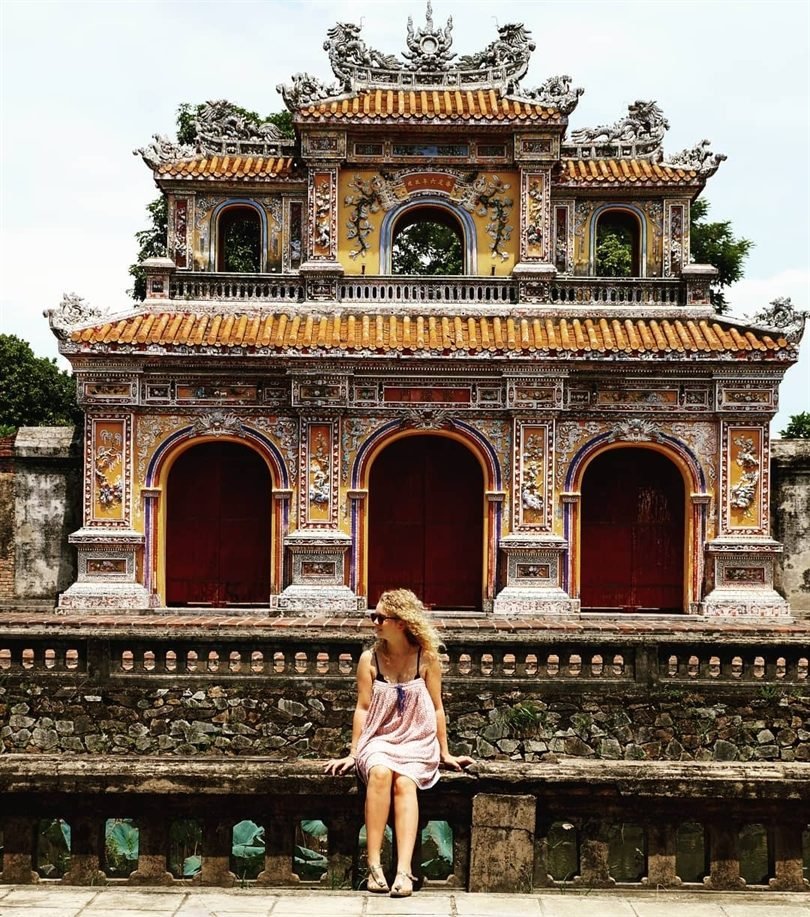
Hue stands apart from Vietnam’s beach party cities. The city’s identity centers on imperial heritage, temples, and traditional values. For example, the historic Imperial City of Hue shapes both tourism and local pride.
As a result, public drug use conflicts with prevailing social norms. Although small private circles may experiment quietly, stigma remains strong.
Key cultural realities include:
- Conservative family structures
- Limited nightlife scene
- Low tolerance for visible drug behavior
Unlike coastal party hubs such as Nha Trang, Hue does not provide broad nightlife cover for cannabis consumption. Therefore, visibility increases exposure.
Enforcement Climate in Hue
On paper, penalties for weed in Hue are severe. In practice, enforcement often focuses on supply chains. However, user enforcement remains possible, especially during nightlife checks or group gatherings.
Police operations have already targeted cannabis sellers in the city. Moreover, Vietnam periodically intensifies drug campaigns nationwide.
Consequently, enforcement patterns can tighten quickly. A city that appears relaxed one month may see active raids the next.
Travelers should avoid assuming stability in discretionary enforcement.
Harm Reduction and Practical Risk Management
The most effective harm-reduction strategy in Hue is abstinence. That position reflects both legal exposure and enforcement unpredictability.
However, realistic risk control measures include:
- Do not import cannabis, hash, or CBD into Vietnam.
- Avoid purchasing from strangers near tourist landmarks.
- Never smoke in public areas such as along the Perfume River or near the Imperial City.
- Keep quantities minimal if someone ignores legal advice.
- Never carry packaging that suggests distribution.
- Do not operate a motorbike under any intoxicant.
Because Vietnamese law permits harsh sentences for trafficking, amount and appearance matter. Even small packaging errors can shift police perception.
If a person experiences medical distress after using a substance, seeking hospital care promptly is critical. Doctors focus on stabilizing patients rather than pursuing prosecution.
Risk Assessment: Weed in Hue
When analyzing weed in Hue, three layers define the landscape.
Legal Layer
Cannabis remains illegal nationwide. Severe penalties exist for sale, cultivation, and trafficking.
Market Layer
Access is limited, products are inconsistent, and prices reflect scarcity. The underground market offers no quality control.
Cultural Layer
Hue’s conservative identity discourages open drug culture. Social stigma remains strong, and discretion dominates.
Because these layers overlap, risk becomes structural rather than symbolic.
Final Perspective on Weed in Hue
Hue offers remarkable history, refined cuisine, and cultural depth. Visitors explore palaces, pagodas, and quiet river views. However, under Vietnam’s current legal system, Hue is not a viable destination for cannabis use.
Weed in Hue exists only in a small underground sphere. Meanwhile, penalties remain severe on paper, and enforcement can escalate without warning. Foreigners receive no exemption, and importation risk is particularly high.
Therefore, the rational conclusion is clear: enjoy Hue for its heritage and atmosphere, not for cannabis. The only genuinely low-risk approach is to experience the city sober and reserve cannabis travel for jurisdictions that provide explicit legal protection.
Under Vietnam’s zero-tolerance regime, the margin for error remains narrow.