
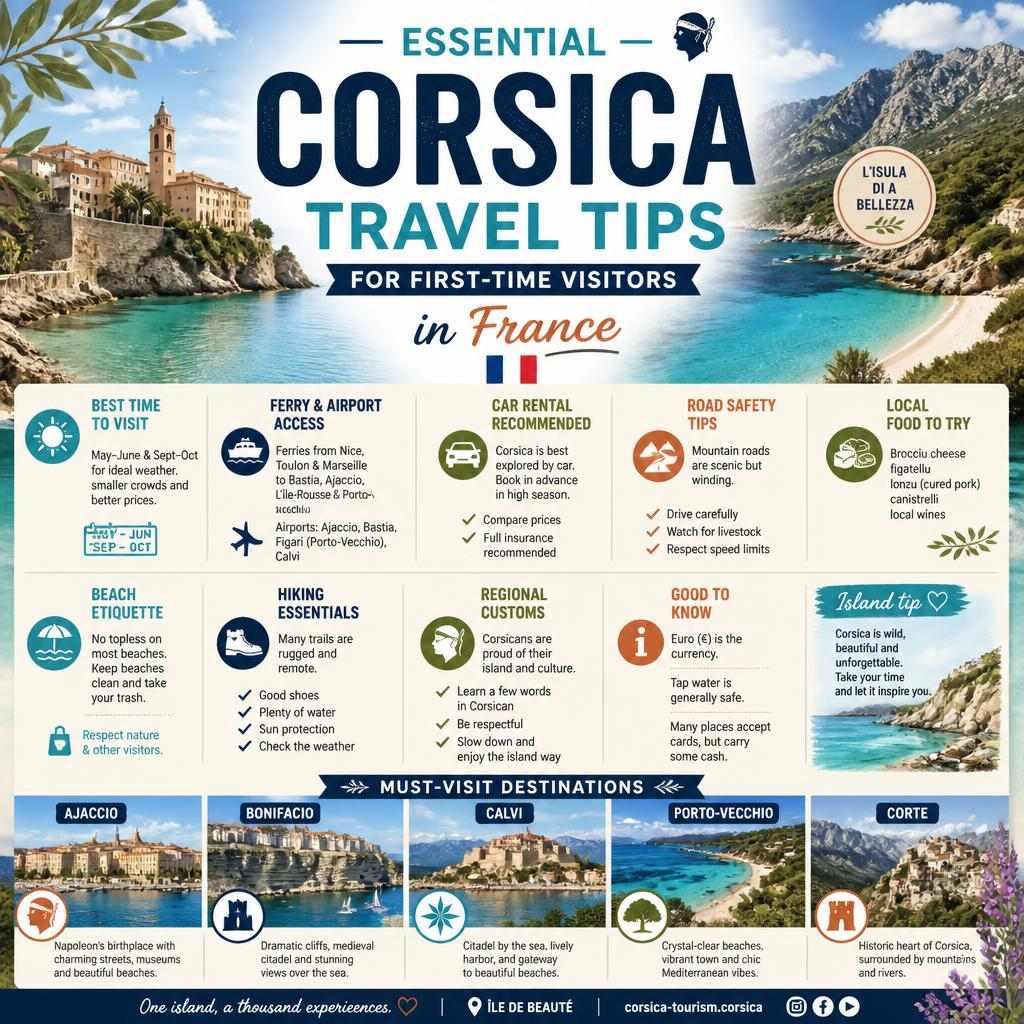
Essential Corsica Travel Tips for First-Time Visitors
Corsica, a French Mediterranean island, combines turquoise beaches, rugged mountains, historic villages and distinctive island cuisine. For first-time visitors, it offers plenty to explore—but planning ahead is important, especially during the busy summer season.
These essential Corsica travel tips will help you plan a smoother trip in 2026.
1. Choose the Best Time to Visit Corsica
June and September are excellent months for balancing warm weather with a less intense peak-season atmosphere. July and August are popular for beach holidays, but accommodation, transport and major attractions can be busier.
Spring and autumn are appealing for hiking, scenic drives and exploring historic towns. Check seasonal opening dates, as some ferry and flight services, restaurants and attractions operate less frequently outside summer.
2. Book Flights or Ferries Early
You can reach Corsica by air or sea. The island has four airports: Ajaccio, Bastia, Calvi and Figari. Ferry services connect Corsica with ports in mainland France and Italy.
If you plan to visit during the summer holidays, compare transport options and reserve early—particularly if you want to take a car on the ferry.
3. Decide How to Get Around
Renting a car is a practical way to discover remote beaches, mountain villages and countryside. However, Corsica’s roads can be winding, so journeys may take longer than distances on a map suggest.
Public transport is another option. The island’s railway connects major destinations including Ajaccio, Bastia, Corte and Calvi, with scenic mountain and coastal sections. Bus services can help too, but check timetables carefully if you’re visiting smaller towns.
4. Pick the Right Base
Your ideal base depends on the holiday you’re planning:
- Ajaccio: City culture, restaurants and a convenient western-coast base.
- Bastia: Historic streets, a busy port and access to northern Corsica.
- Calvi: Beaches, a marina and the Balagne region.
- Porto-Vecchio: Southern beaches and summer nightlife.
- Corte: Mountain scenery, hiking and exploring inland Corsica.
For a short trip, staying in one region can be more relaxing than trying to cover the entire island.
5. Explore More Than the Beaches
Corsica’s coastline is spectacular, but the interior deserves time too. Visit hilltop villages, explore local markets, take a scenic train journey or walk a marked mountain trail.
Experienced hikers may consider the famous GR20, but it is a demanding long-distance route that requires suitable fitness, equipment and planning. Choose a shorter marked hike if you’re a beginner, and check local conditions before setting out.
6. Try Corsican Food
Make time for local specialties, including Corsican charcuterie, regional cheeses, chestnut-based dishes, fresh seafood and traditional pastries. Village markets are also good places to discover local honey, preserves and other regional products.
Ask about ingredients if you have allergies or dietary requirements, as menus and availability vary between restaurants.
7. Plan Your Budget and Accommodation
Book accommodation well ahead for July and August, especially in popular coastal areas. Compare the total cost of accommodation, transport, parking and meals rather than choosing solely by nightly room rate.
A car can give you flexibility, but rental costs, fuel and parking can add up. Staying in a walkable town may be better if you prefer a relaxed, car-free holiday.
Final Tips for First-Time Visitors
Pack comfortable walking shoes, sun protection and layers for cooler mountain conditions. Keep some flexibility in your schedule, allow extra time for scenic drives, and check transport and attraction details before departure.
The best Corsica itinerary balances beaches, villages, local food and mountain scenery. Plan around one or two regions, book summer travel early and leave room for spontaneous discoveries along the way.