
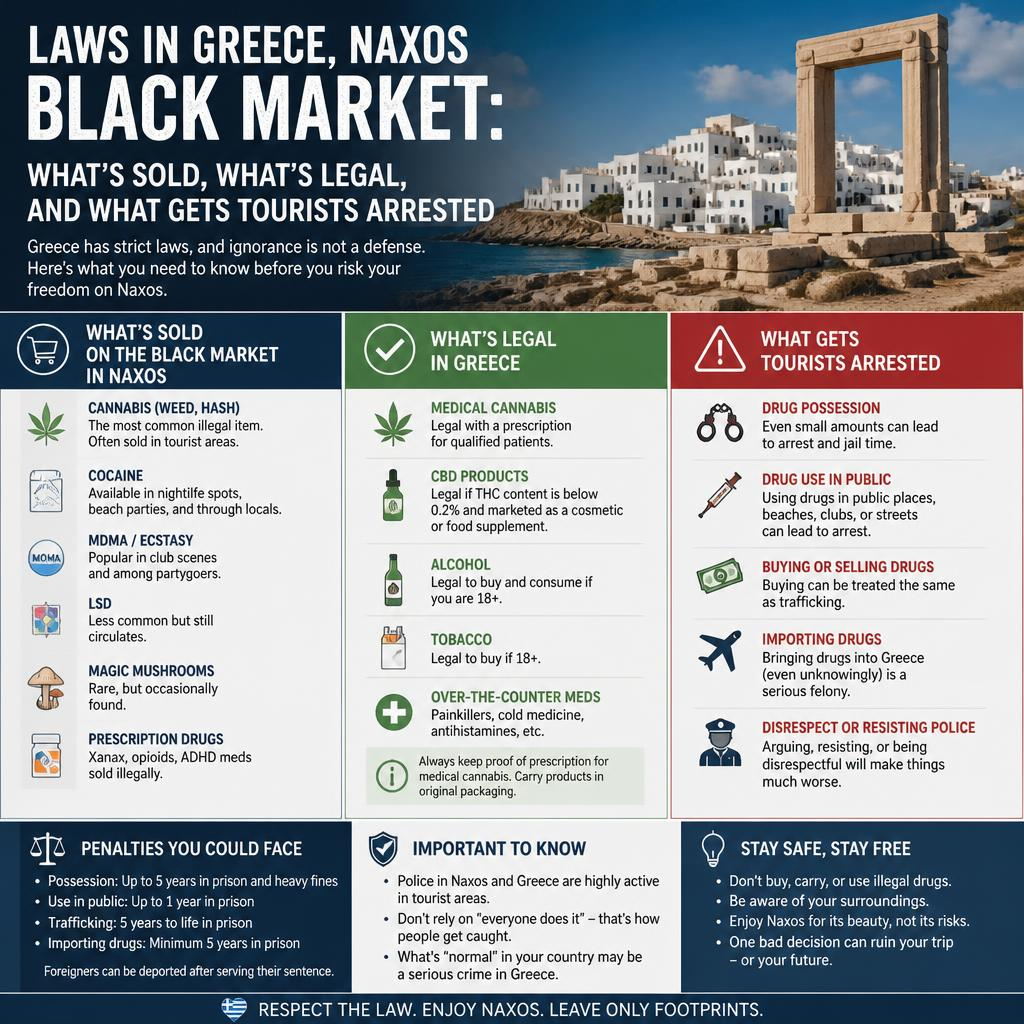
Laws in Greece, Naxos Black Market: What’s Sold, What’s Legal, and What Gets Tourists Arrested
Naxos attracts visitors with its beaches, traditional villages, waterfront tavernas, and lively summer nightlife. However, tourists should remember that Greece’s national criminal and customs laws apply throughout the island. An informal sale or unusually cheap deal does not automatically make a product legal. The Naxos black market is illegal
Understanding the difference between legitimate shopping and illegal trade can help visitors avoid confiscated goods, fines and criminal proceedings.
What Does the Naxos Black Market Include?
Illegal trade can involve several categories of goods, including controlled drugs, counterfeit designer products, improperly supplied prescription medicines, untaxed tobacco and unauthorized weapons. Protected wildlife and certain cultural objects may also be subject to strict trading and export restrictions.
These are general categories of illicit trade, not a verified inventory of Naxos’s local black market. Visitors should be cautious about online claims identifying particular sellers or locations without reliable evidence.
What Can Tourists Buy Legally in Naxos?
Travelers can generally buy ordinary goods through legitimate shops, established market stalls, authorized pharmacies and licensed retailers.
Local food, crafts, souvenirs, clothing and other lawful merchandise are common purchases. Travelers can also buy alcohol and tobacco from authorized retailers, provided they follow the applicable age limits, tax rules, and other legal requirements.
Prescription medicines are different. Some require medical authorization, and controlled medicines may have additional requirements when carried across borders. Keep medication in its original packaging and carry appropriate documentation.
What Can Get Tourists Into Legal Trouble?
Illegal drugs
Greek law prohibits unlawful drug possession and use. The Hellenic Police warns that even small quantities can trigger criminal charges; moreover, Greek law sets no universal quantity threshold that guarantees authorities will treat possession as personal use. Supply and trafficking offenses can carry much heavier penalties.
Counterfeit designer products
Fake handbags, watches, shoes, clothing and accessories can support illegal trade. Greek customs enforces intellectual-property laws and can seize counterfeit goods. Authorities determine the legal outcomes based on the circumstances; therefore, visitors should never assume a product is genuine just because a seller offers it openly.
Unverified prescription medicines
Buying medication from an unauthorized seller creates health risks and may violate prescription or controlled-substance rules. Counterfeit tablets can contain the wrong ingredients or unexpected doses.
Weapons and restricted goods
Weapons and ammunition are subject to Greek restrictions. Certain plants, animals, antiques and cultural objects may also require permits or documentation. Do not buy or transport restricted items without checking the applicable requirements.
Can Tourists Be Arrested in Naxos?
Yes. Foreign visitors are subject to Greek law. Depending on the suspected offense, authorities may investigate, seize goods, detain a suspect or bring criminal charges.
However, not every questionable purchase automatically leads to arrest. The outcome depends on the item, the conduct involved and the evidence available.
How to Avoid Problems
Buy from legitimate retailers, request receipts and use authorized pharmacies for medicines. Be wary of goods offered at implausibly low prices or deals that involve concealing products from customs. Check official rules before traveling with medication, weapons or protected items.
The bottom line: Naxos is a destination for enjoying Greek island life, not an exemption from national law. When a purchase depends on bypassing regulations or hiding what you are buying, walking away is the safest choice.